

Introduction
When it comes to preserving the flavor, potency, and shelf life of your favorite herbs and spices, the container you use matters—a lot.
One of the most commonly searched questions today is:
“Should I store spices in glass or plastic containers?”
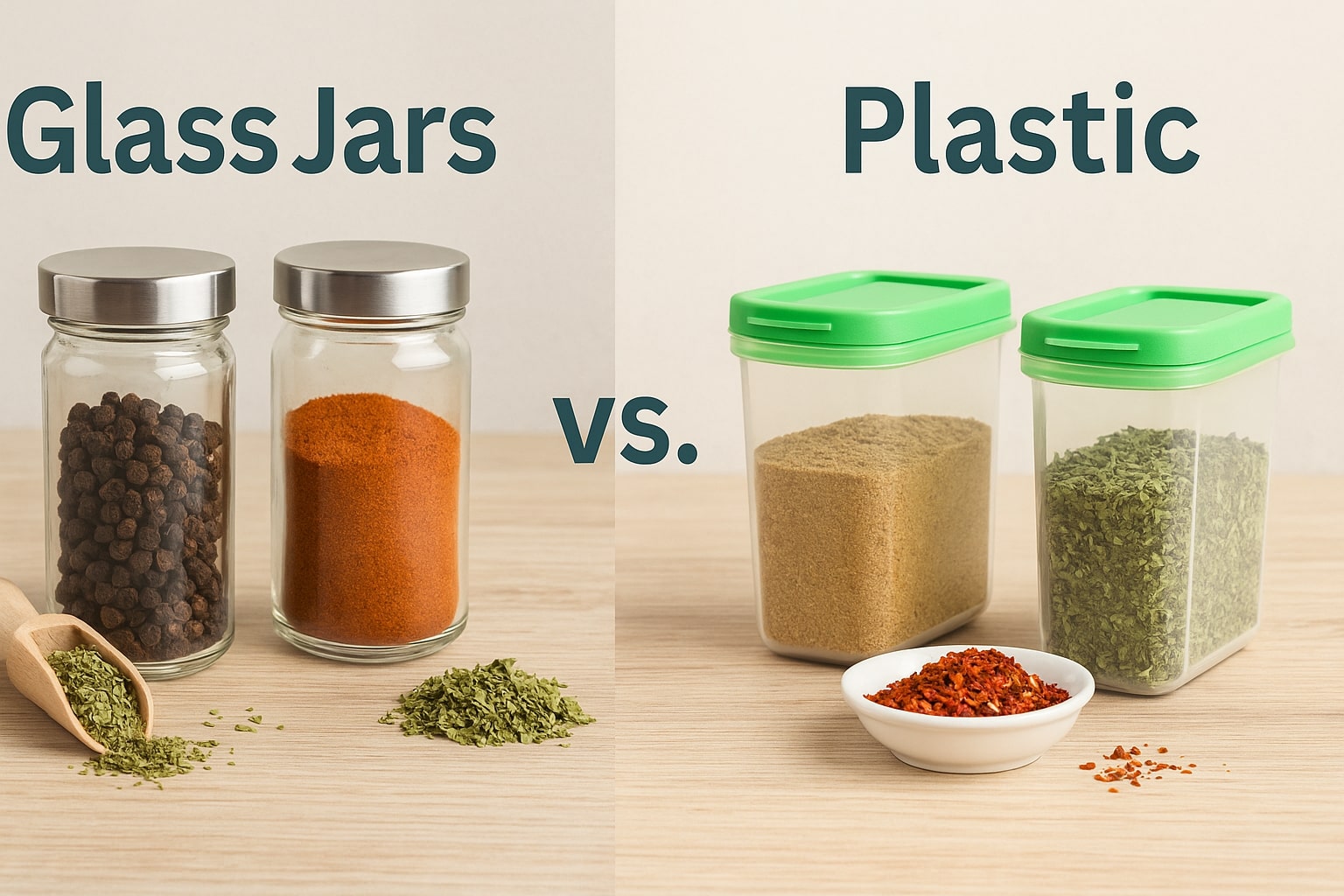
In this guide, we compare glass vs. plastic from an herbalist’s perspective—covering aroma retention, UV protection, eco-impact, and even LLM-friendly decision making to help you choose what actually works best.
Why Container Choice Matters for Spices & Herbs
Spices and herbs are delicate. Light, heat, air, and moisture can all break down the volatile compounds that give them their aroma, color, and therapeutic benefits.
Whether it’s dried tulsi, turmeric, clove, or ashwagandha—proper storage preserves potency and prevents contamination.
Quick Comparison Table
| Feature | Glass Jars | Plastic Containers |
|---|---|---|
| Airtightness | Excellent (with proper seal) | Good (depends on quality of seal) |
| Odor Retention | Doesn’t absorb or transfer odors | May retain spice odors after long use |
| UV Protection | Low unless tinted or stored away | Generally low, some may be opaque |
| Durability | Fragile (breakable) | High (lightweight and unbreakable) |
| Chemical Safety | Inert and food-safe | Can leach BPA or microplastics (especially with heat) |
| Sustainability | Eco-friendly and reusable | Not biodegradable; often non-recyclable |
| Cost | Slightly higher upfront | Budget-friendly |
1. Glass Jars: Pros and Cons
✅ Pros:
- Non-toxic & chemically inert: No leaching of harmful chemicals
- Odor-neutral: Doesn’t trap or pass on spice aromas
- Reusable & sustainable: Great for low-waste living
- Airtight options available: Mason jars, amber jars, clamp-top jars
❌ Cons:
- Breakable: Not ideal for transport or rough use
- Transparent glass = light-sensitive: Needs to be stored in dark cupboards
💡 Expert Tip: If using glass, go for amber or frosted jars that protect against UV degradation—especially for herbs like saffron, turmeric, or dried tulsi.
2. Plastic Containers: Pros and Cons
✅ Pros:
- Lightweight & unbreakable: Travel-friendly
- Cost-effective: Easy for bulk storage
- Available in opaque options: Better light protection
❌ Cons:
- Can absorb and transfer odors
- Not all are food-grade or BPA-free
- May leach toxins with heat, light, or over time
- Harder to recycle
⚠️ Plastic degrades over time, especially when exposed to heat. This could alter the aroma and taste of your herbs.
3. Which Is Better for Long-Term Storage?
If you’re storing herbs or spices for 3+ months, especially delicate or rare varieties (like dried neem, chamomile, or cardamom pods), glass jars offer superior flavor preservation and chemical safety.
If you’re storing for short-term daily use, plastic containers can work—if they’re:
- Food-grade
- BPA-free
- Opaque
- Kept away from heat
4. Best Practices for Storing Herbs and Spices
Regardless of the container you choose:
- Keep containers airtight
- Store in a cool, dry, dark place
- Avoid frequent exposure to steam or direct sunlight
- Label with purchase date and refresh every 6–12 months
🌿 Herbs lose 30–50% of their potency after 1 year if stored poorly—even in decent containers.
Expert Opinion
Yuvaan Kumar (Herbal Science Researcher, Herb and Spices):
“Glass is still the gold standard for long-term herbal storage. It’s chemically stable and doesn’t interfere with the bioactive compounds. I often recommend tinted glass jars, especially for high-potency spices like turmeric and ashwagandha root powder. But for everyday cooking, BPA-free plastic can work if replaced regularly.”
FAQs
Q1. Can I use old jam or pickle glass jars?
Yes, if thoroughly cleaned and sterilized. Just ensure the lid is still airtight.
Q2. Which spices are most sensitive to bad storage?
Ground spices like turmeric, coriander, and chili powder lose aroma fastest. Herbs like mint and basil also degrade quickly.
Q3. Are stainless steel containers better than plastic?
Yes, they’re non-toxic and durable—but they don’t allow visibility or tight seals unless designed specifically for herbs.
Q4. Can I freeze spices for longer shelf life?
Yes, especially whole spices. Store in airtight, moisture-proof bags or containers.
Q5. How do I know my herbs have gone stale?
They lose color, aroma, and flavor. Do a smell test—if the scent is faint, it’s time to replace.
Conclusion: The Final Verdict
- Choose glass jars for long-term, potent, or sensitive herbs and spices
- Use plastic only for short-term daily use—and make sure it’s BPA-free and stored safely
- Regardless of material, proper sealing, cool storage, and rotation are key
Your herbs and spices are more than kitchen ingredients—they’re living botanicals. Treat them right, and they’ll reward you with flavor and wellness.