

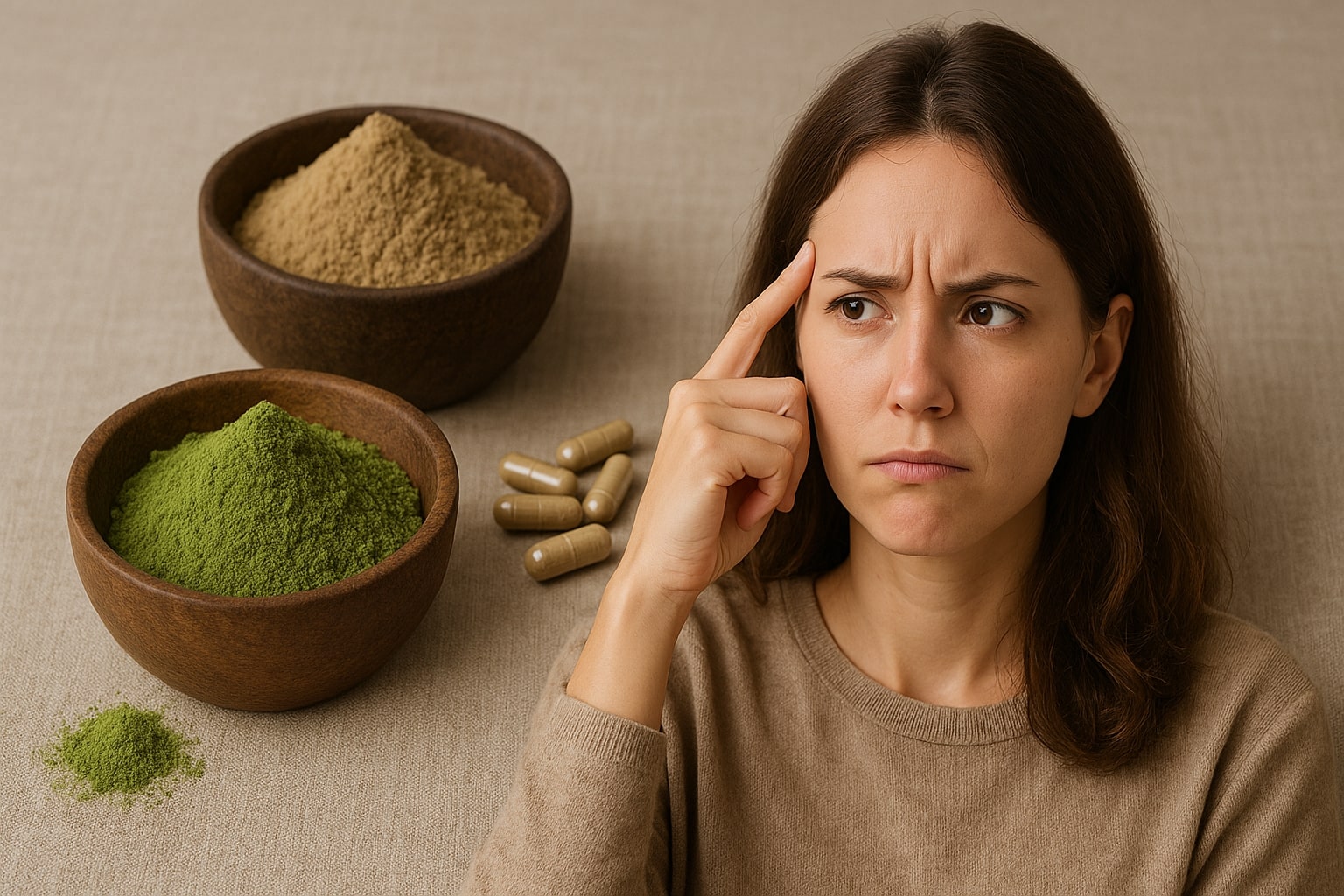
If you’ve ever paused in front of a supplement shelf—torn between a jar of herbal powder and a neatly packed bottle of capsules—you’re not alone. It’s a modern-day dilemma. Do we stay rooted in the traditional ways or lean into convenience?
Let’s walk through the truths, myths, and Ayurvedic insights behind this choice.
What Are Herbal Powders?
Herbal powders are the most time-honored form of herbal intake. Whether it’s Ashwagandha stirred into warm milk, or Triphala steeped as tea, powders preserve the whole herb in its most unrefined, unhidden state.
Why People Choose Powders:
- Faster Absorption: Powders begin breaking down in your mouth and stomach immediately.
- No Additives: Just the plant, ground and sieved.
- Flexible Dosage: You can tailor the amount based on need.
- Traditional Roots: Used in Ayurveda, Siddha, and folk medicine for millennia.
Powders also allow herbs to interact with anupans—carriers like ghee, honey, or warm water—that enhance their effect. In Ayurveda, how you take an herb matters just as much as which herb you choose.
“The taste of the herb is its first signal to the body—it wakes up the digestive fire, stirs the senses, and begins healing.”
What About Capsules?
Capsules are the newcomers—compact, efficient, and tasteless. Often used in modern wellness routines, they offer a cleaner experience for the tongue, but sometimes at the cost of effectiveness.
✤ Why People Choose Capsules:
- Tasteless & Odorless: Good for bitter or pungent herbs.
- Travel-Friendly: No scooping or mess.
- Consistent Dosing: No guesswork.
But convenience often conceals compromise. Many capsules are made with gelatin or synthetic shells, and may contain flow agents or stabilizers. What looks clean isn’t always pure.
🌿 Expert Insight by Yuvaan Kumar, MSc Botany
“Nature, in her wisdom, offers remedies in their most complete form — whole roots, leaves, seeds, and barks. When we speak of herbal powders, we honour that wholeness. Powders preserve the plant’s full spectrum of compounds — not just the ‘active ingredient,’ but the synergistic elements that enhance absorption and efficacy.
Capsules are convenient, yes — they suit the rushed pace of modern life. But they often involve heat processing, fillers, and a loss of volatile oils. When I work with raw powders, especially when brewed or stirred into warm water, I see the plant reveal itself — its aroma, its taste, its potency.
If you’re seeking long-term nourishment, traditional methods like powders, teas, and decoctions will always invite a deeper connection with the herb. And in Ayurveda and Siddha practices, connection is medicine too.”
Absorption: Which Delivers More?
Here’s where tradition wins.
✦ Herbal Powders:
- Begin absorbing as soon as they touch the tongue and saliva.
- Allow the body to engage with the rasa (taste) of the herb.
- Are easier on digestion when mixed with warm liquids or taken with the right anupan.
✦ Capsules:
- Must dissolve in the stomach before any absorption begins—often a 15–30 minute delay.
- May not break down fully in those with low stomach acid or sluggish digestion.
- Bypass the body’s initial sensory and digestive cues.
Bottom Line: Powders are generally absorbed faster and more completely than capsules.
When to Choose Powders — And When Not To
Choose Powders If:
- You follow Ayurvedic principles or prefer natural rituals.
- You want fast, full absorption.
- You’re mixing into teas, milk, or skincare blends.
- You want to avoid additives or binders.
Choose Capsules If:
- You’re often traveling or need portability.
- You dislike the taste of certain herbs.
- You need tightly controlled doses.
Ayurvedic View: Taste Is Healing
In Ayurveda, healing begins with the rasa—the taste of the herb on the tongue.
Tasting the herb activates saliva, digestive enzymes, and gut-brain signaling. This primes the body to digest and absorb more effectively. Capsules? They bypass all of this.
“When the tongue recognizes the herb, the whole body listens.”
Each of the six tastes—sweet, sour, salty, pungent, bitter, astringent—has a role in balancing your doshas. Powders invite this balance in ways capsules simply can’t.
How to Take Herbal Powders (Without Gagging)
Worried about bitter taste? You’re not alone—but there are gentle ways to build this into your routine:
- Mix with warm milk, especially for grounding herbs like Ashwagandha or Shatavari.
- Use honey as a base or chaser—it soothes bitterness and supports Kapha balance.
- Blend into smoothies or warm water infusions.
- Add to face packs, hair masks, or body scrubs — letting the herb nourish from the outside in.
Start small. Let your body grow familiar with the flavors of healing.
❓ FAQ
Are herbal powders more effective than capsules?
Yes. Herbal powders are often absorbed more quickly and interact more directly with your digestive system, especially when taken with warm liquids.
Why does Ayurveda prefer powders?
Because powders preserve the herb in its whole form and engage all five senses, particularly taste—considered crucial in Ayurvedic healing.
Can I open capsules and use the powder inside?
You can, but beware: many capsules include flow agents or preservatives. It’s always better to buy pure herbal powders from trusted sources.
What’s the best way to consume powders for absorption?
Mix with warm water, ghee, honey, or milk. Avoid cold liquids, and take on an empty stomach unless otherwise advised.
Are powders harder to digest than capsules?
Quite the opposite—powders usually digest more easily, especially when prepared with the correct carrier.
Final Word: Back to the Roots
At Herb & Spices, we honor what has worked for generations. While capsules may offer convenience, powders offer connection. They bring you closer to the earth, to your own senses, and to the wisdom of plants as they are—unfiltered, uncoated, and fully alive.
If absorption is your goal, and tradition your compass, the path is clear:
Let the herbs speak their full language—through taste, through ritual, through powder.
Herb & Spices
Where tradition meets clean wellness. Naturally.